
Cooling the Wound

Some notes on pleasure and pain
I was eleven. After many years of regularly suffering, I had my tonsils removed. At Dr. Sen’s Nursing Home, a private clinic in the Woodlands neighborhood of then Calcutta. It wasn’t traumatic, in fact it was an overnight adventure. The doctor even let me stand at the doorway of the operating room while he performed the surgery on some other child my age. I was given ice cream—not scooped, not served ceremoniously, but hacked off a frozen slab and placed before me like a prescription. It was a three-in-one slab, vanilla, chocolate and strawberry. I remember the weight of it, the blunt cold against a throat still raw.
I long for that pleasure now, when the pain clenching my chest is from the shameless cruelty of excess that the country I live in seems to be gripped with. What grows sharper in old age is the longing for pleasure, the avoidance of pain. Or rather, the conditions under which pleasure becomes visible. It no longer requires abundance or novelty, only relief: the taste of good ramen, biriyani with potatoes and mutton, from Kolkata, sentences from a book that trill, scenes from a film glimmer in a darkened auditorium. Pleasure now is an act of permission, not indulgence. In old age, that logic returns. Pleasure no longer pretends to be innocent. It knows what it is for. It is to keep cruelty at bay. This may be why memory, in later life, rearranges itself around small mercies. Not triumphs, not turning points, but moments when the body was briefly absolved of its demands.

Even then, pleasure arrived tethered to pain. It was not a reward but a balm. The ice cream did not erase the soreness; it made it bearable.
Thirty-one years in a house teaches you the grammar of endurance. The banister remembers my palm; the floorboards keep my hesitancies. Selling it feels less like a transaction than a loosening—rooms exhaling, objects asking to be forgiven for having been loved. An independent living community promises lightness, fewer keys, fewer decisions masquerading as freedom. I tell myself that independence can be collective without becoming lonely, that a smaller life is not a smaller self. Still, I pack books as if they were proof, and linger in doorways like a child at a threshold, tasting the air for what might be lost.

I am a brown man in a country that is now mercurially schizophrenic of my kind. I find the irony of being fluent in the mores of this society as well as my birth country more pronounced now than when I came here fifty-five years ago. And the fact that I take reading seminars in totemic literature of the Western world taught by a woman from a distant land who immigrated without any knowledge of English at age six. She is, in my experience, the most knowledgeable and enthusiastic provisioner of seminal Western literature.
What I have learned is that to exist among others is already to participate in their fate. Because our lives are intertwined—through action, omission, benefit, and inheritance—we bear responsibility not only for what we do, but for the conditions we help sustain. Guilt here is not legal blame or personal shame; it is an ethical awareness of interdependence. To recognize it is not to despair, but to accept that responsibility begins before intention and extends beyond innocence. I learnt it, perhaps, in reading Dostoevsky with the woman who a few decades ago spoke no English: “Each of us is guilty before everyone, for everything”
Perhaps this is why that slab of ice cream remains so vivid. It was my earliest lesson in a truth I would spend a lifetime circling: that pleasure is most honest when it acknowledges pain, when it does not deny the wound but cools it. That what we remember, in the end, are not the grand delights but the moments when the world briefly made sense of our suffering and met it halfway.
What I resist most is the drag of collective guilt—the way a nation can act, loud and unapproved, and leave its citizens holding the receipt. There is a fatigue to being implicated by proximity, to being told that silence is consent and speech is betrayal. I want a civic life that does not demand my constant shame. I want accountability to feel like repair. I practice a quieter dissent: attention to a few, refusal to ignore suffering, the small ethics of daily conduct.
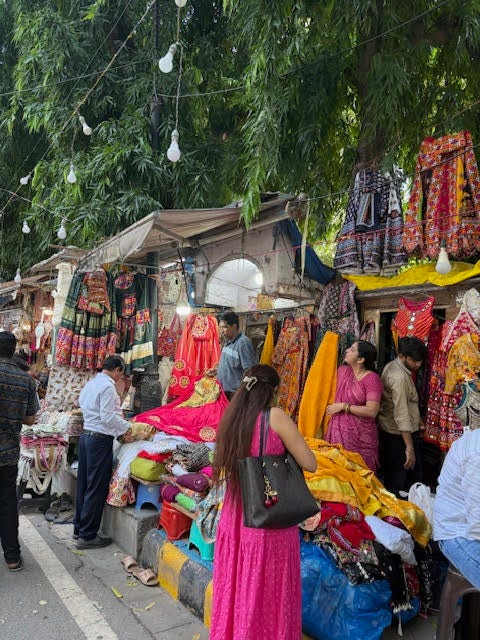
So I return, oddly, to the ice cream. To the lesson that relief can be simple and shared without becoming numbing. That there are pleasures which do not absolve but restore, which make room for the next responsible act. Moving on, not escaping, like healing, is not erasure; it is a careful cooling of what hurts so we can swallow again. I carry forward what I can: the courage to downsize without shrinking, the hope that my life—like the country I live in —might yet learn to govern itself with care.
(Photographs courtesy of the author. All Rights Reserved. Reproductions without permission prohibited)
The cost of a monthly subscription is the same as a cup of coffee in metropolitan city
Wonderful, Amit. Thank you. It is just what I needed to read today.
Powerful words Amit. Thank you.